A new pillow can feel promising for one night and disappointing the next. Before deciding that it has transformed your sleep, or that it belongs in the returns box, keep a short record of what you actually noticed. For a side sleeper, that might include comfort around the ear, the urge to rearrange the pillow, and whether the filling stayed where you wanted it.
A useful pillow diary combines a few sleep notes with a description of the setup. It does not need an app, a wearable or an elaborate scoring system. Its purpose is to make a buying decision easier to explain. It cannot establish that a pillow treats a sleep disorder.
Choose one question before the first night
Write down the question you want the diary to answer. “Do I prefer this pillow to my current one?” is more manageable than “Is my sleep better?” You could make the question more specific: “Do I spend less time rearranging the filling?” or “Is this shape comfortable when I switch sides?”
Choose one or two priorities. A long questionnaire becomes another chore and makes it tempting to stop recording. Keep the same priorities throughout the comparison so a good night does not persuade you to change the rules halfway through.
Keep sleep notes separate from pillow notes
The National Heart, Lung, and Blood Institute’s sleep diary records sleep timing, remembered awakenings, daytime sleepiness and contextual details such as caffeine, naps and medicines. Those details can help describe the night beyond the pillow itself.
Add a small comfort section alongside that information. Use your own short words consistently: comfortable, mixed or uncomfortable. These are personal descriptions, not medical scores. If you record sleep timings, identify them as estimates unless you have an actual time record. Eight hours between getting into bed and getting up does not mean eight hours asleep.
| Field | What to write |
|---|---|
| Setup | Pillow, cover, mattress and any removable filling or insert setting. |
| Comfort | Your chosen rating and one specific observation. |
| Adjustments | Whether you folded, moved, swapped or refilled the pillow. |
| Sleep notes | Approximate bed and wake times, remembered interruptions and how rested you felt. |
| Context | Anything unusual, such as travel, noise, illness or a different routine. |
Describe the setup well enough to repeat it
“New pillow” is not a useful label if you remove two handfuls of filling after the first night. Give each setup a short name, such as “Pillow B, all inserts” and “Pillow B, thin insert removed.” If the manufacturer allows adjustments, note them before bed rather than reconstructing them later.
Keep the mattress, topper and pillowcase the same where practical. If something else changes, record it. You do not need to make your bedroom into a laboratory; you simply need to know which comparison you made. A pillow used in a hotel bed and then at home has been tried in two different setups.
Plan a manageable comparison period
Check the seller’s return deadline and conditions before starting. Write the last return date somewhere separate from the diary, particularly if packaging must be retained. The diary should support your decision before that deadline.
If your current setup is comfortable enough to keep using, you might record a few ordinary nights before trying the new pillow. Then record several nights with the new setup. This is a practical comparison, not a validated testing protocol; there is no universal number of nights that proves a pillow is right.
Do not force yourself to continue with a setup that is uncomfortable just to complete the record. A note explaining why you stopped is useful information. Avoid changing medicines, supplements or sleep schedules merely to make a pillow comparison look cleaner.
Write a brief entry the next morning
Keep the notebook or form somewhere convenient and complete the main entry after getting up. Describe what you remember. “Woke at least twice” is more honest than inventing an exact count. Leave a field blank or mark it uncertain when necessary.
You can add daytime context later, but avoid repeatedly checking the clock overnight to collect data. For this buying decision, a consistent short record is more useful than an exhausting attempt to measure every minute.
A hypothetical record: three nights, three different stories
The following example is invented to show the format. It is not a product test or a result from a real sleeper.
| Night | Pillow observation | Context |
|---|---|---|
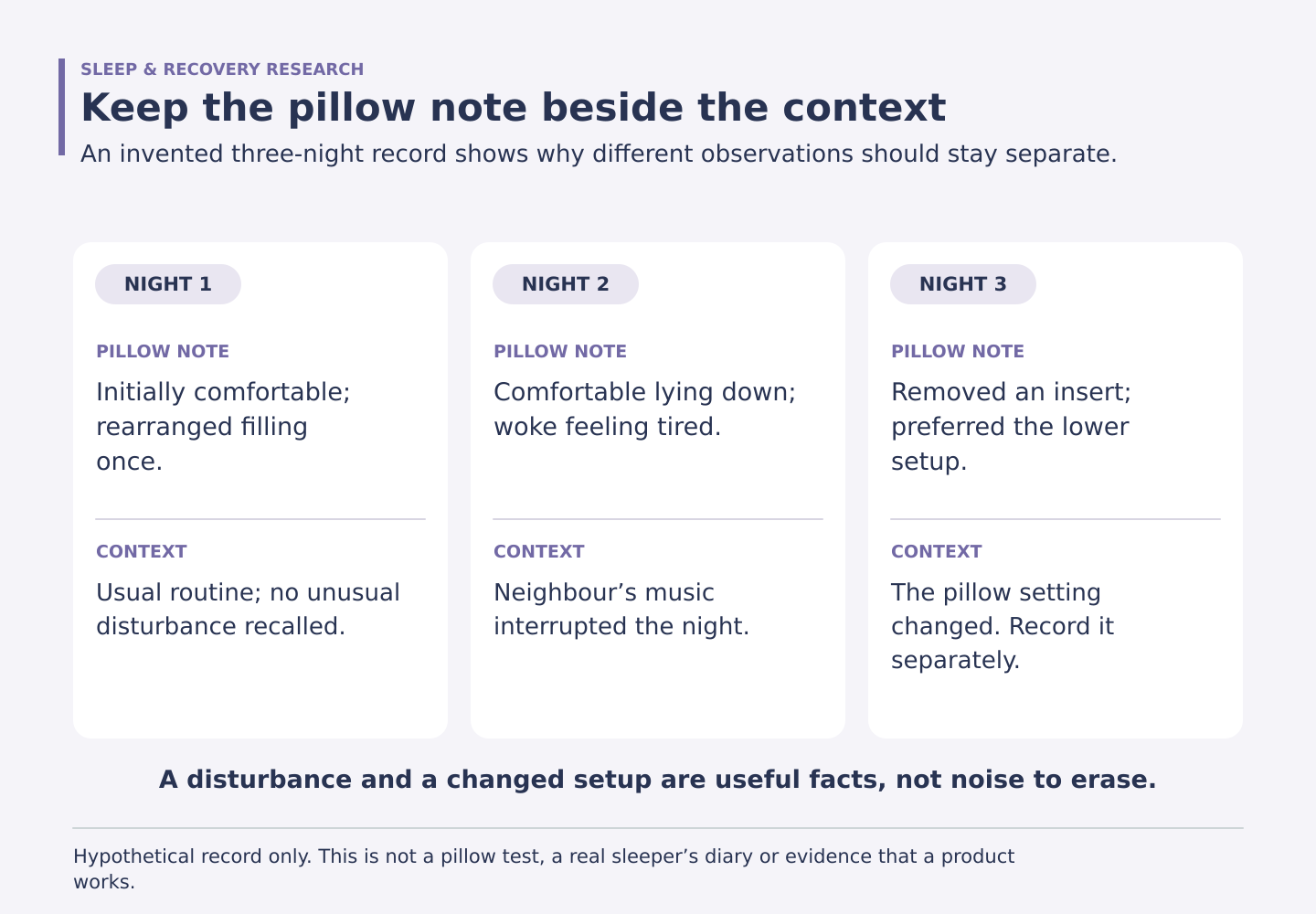
| 1 | Comfortable initially; rearranged the filling once. | Usual routine; no unusual disturbance remembered. |
| 2 | Comfortable when lying down; woke feeling tired. | Neighbour’s music interrupted the night. |
| 3 | Removed an insert before bed; preferred the lower setup. | A different pillow setting, so record it separately. |
Night two does not automatically count as evidence that the pillow failed: there was a separate disturbance. Night three may help identify a preferred setting, but it should not be silently combined with the first two nights as though nothing changed.
Read the pattern without claiming too much
Review the complete record, including ordinary and disappointing nights. Ask whether your original priorities improved consistently. You might decide that the new pillow feels easier to position while your sleep remains variable. That is a useful, limited conclusion.
Keep comfort, sleep and buying preferences distinct. A pillow can be pleasant but inconvenient to maintain. It can fit your budget but offer no clear comfort improvement. Write your decision in one sentence: what you preferred, under which setup, and what remains uncertain.
Know when the question is bigger than a pillow
If inadequate sleep affects daily activities, discuss it with a healthcare professional. The NHLBI’s explanation of insomnia assessment describes how a sleep diary can support that conversation and why clinicians consider symptoms, history and sometimes further tests. A home comfort log cannot diagnose the cause of persistent sleep problems.
Keep the record for your next purchase or discussion. Its value is the clear description of your experience, including its limits, rather than a claim that one pillow works for everyone.
If you share the diary for advice, keep a separate copy and remove unrelated personal details. Your buying notes need only contain information relevant to the question you are discussing.